
A Complete Guide to Housing Accommodations for Mental Health, ADHD, Autism, and More
For many students, college housing is just part of the experience. But for others, especially those with anxiety, ADHD, autism, PTSD, or depression, the dorm environment can significantly interfere with functioning, sleep, and academic performance.
The good news: colleges are required to provide reasonable housing accommodations, including single rooms, when a documented disability impacts a student’s ability to live in a shared environment.
The key is knowing what qualifies, what documentation is required, and how to present a strong, evidence-based request.
Need Help Strengthening a Housing Accommodation Request?
If you’re unsure whether your documentation is strong enough—or you’ve already been denied—a comprehensive, evidence-based evaluation can make a significant difference.
At the Center for Applied Psychological Science (CAPS), we specialize in high-stakes accommodation evaluations for college, graduate school, and professional testing environments.
Schedule a consultation to discuss your situation and next steps
What Are College Housing Accommodations?
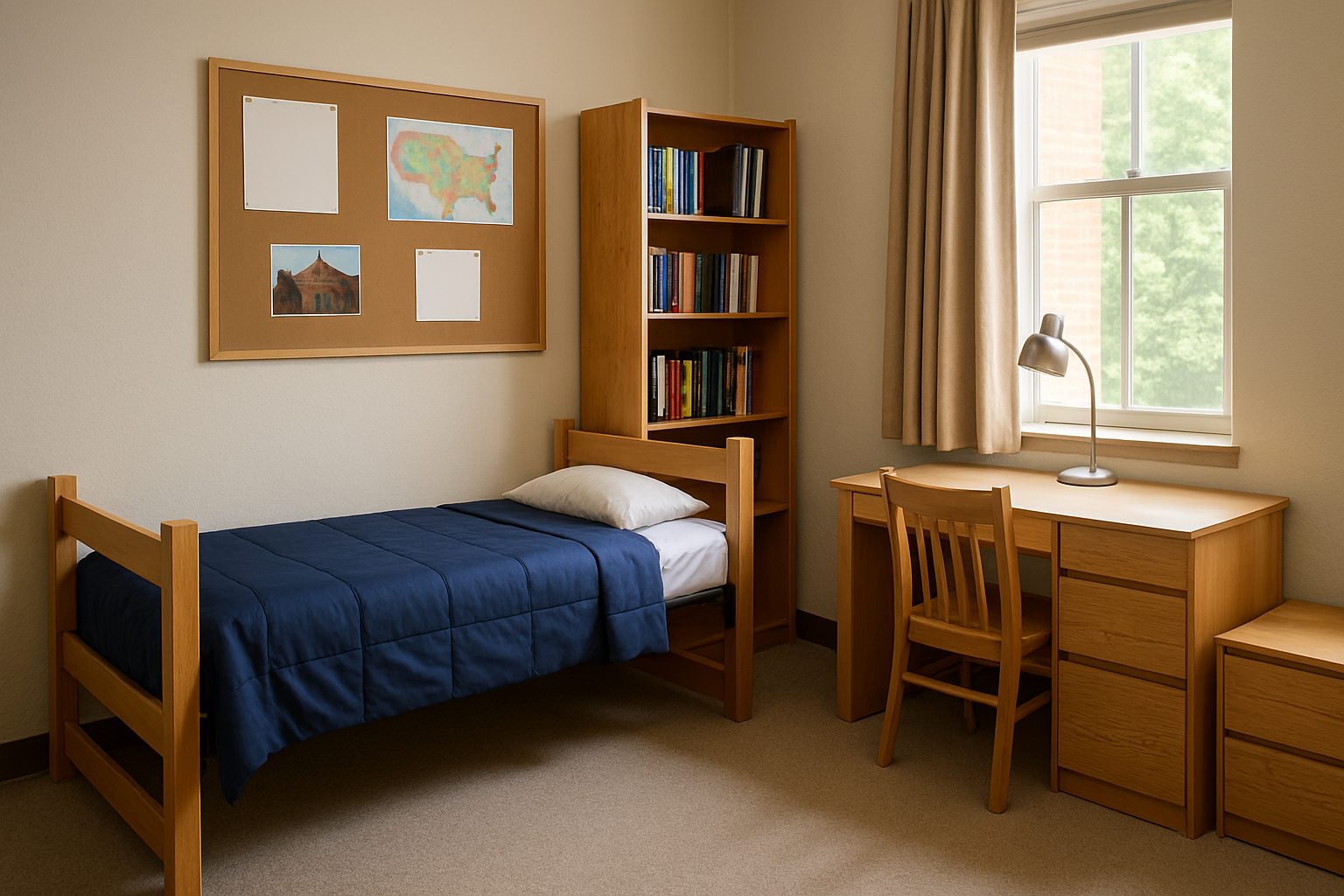
College housing accommodations fall under disability protections (typically through ADA and Section 504). These allow students with documented conditions to receive adjustments that ensure equal access to education.
While most people think of extended time on tests, housing accommodations are just as important—and often more impactful.
Common housing accommodations include:
- Single dorm rooms
- Reduced sensory environments
- Modified roommate matching
- Priority housing placement
- Access to quieter residence halls
A single room accommodation is one of the most commonly requested and one of the most scrutinized. You can read more at the Association on Higher Education and Disability (AHEAD)
Who Qualifies for a Single Dorm Room?
A single room is not granted based on preference; it must be functionally necessary.
The core question schools ask is:
Does the shared living environment significantly impair the student’s functioning due to a documented condition?
Common qualifying conditions include:
- Anxiety disorders (especially social or panic-based)
- ADHD (particularly with sensory or regulation issues)
- Autism spectrum conditions
- PTSD or trauma-related disorders
- Major depressive disorder
- Medical or sleep-related conditions
- What matters most is not the diagnosis itself, but the functional impact. This is outlined in Section 504 of the Rehabilitation Act and the Americans with Disabilities Act (ADA)
How to Get a Single Room in College for Anxiety, ADHD, or Autism
The process is fairly consistent across universities:
1. Register with Disability Services
Students must formally register with the school’s disability or accessibility office.
2. Submit Clinical Documentation
This is where many requests succeed—or fail.
3. Demonstrate Functional Impairment
Documentation must clearly connect the condition to specific difficulties in shared housing.
4. Provide a Rationale for a Single Room
Not just “helpful”—but necessary for equal access.
5. Participate in the Interactive Process
Schools may request clarification or additional documentation.
What Documentation Is Required for Housing Accommodations?
This is the most critical part of the process.
Strong documentation includes:
- A clear diagnosis (when applicable)
- Description of current symptoms
- Explanation of functional limitations in shared living
- Evidence that the limitation is substantial and ongoing
- A specific recommendation (e.g., single room)
- Clinical rationale linking the accommodation to improved functioning
Weak documentation tends to:
- Be vague (“student has anxiety”)
- Lack functional detail
- Fail to explain why a roommate is impairing
How Psychological Testing Strengthens Accommodation Requests
This is where your work becomes a major differentiator.
While some schools accept brief letters, comprehensive psychological evaluations significantly increase approval rates, especially for single-room requests.
Why Testing Matters
Psychological testing:
- Objectively documents cognitive, emotional, and executive functioning
- Demonstrates severity and consistency
- Differentiates between preference vs. clinical necessity
- Provides defensible, evidence-based recommendations
In higher-stakes or more competitive housing environments, testing can be the difference between approval and denial.
Common Psychological Tests Used (and Why)
A strong evaluation often includes a combination of:
Emotional & Personality Functioning
- PAI (Personality Assessment Inventory) identifies anxiety, depression, PTSD features, and distress patterns.
- SPECTRA Provides a dimensional view of psychopathology, including internalizing symptoms and stress response.
- BAI / STAI / CTAS Quantifies anxiety severity and test-related distress.
These help show how intense and impairing the emotional experience is.
Executive Functioning & Daily Regulation
- BRIEF-A or BRIEF2 Measures real-world executive functioning (organization, emotional control, working memory).
- CEFI Assesses self-regulation, planning, and behavioral control.
These are crucial for demonstrating difficulty managing shared environments, noise, routines, and interpersonal stress.
Cognitive & Processing Measures
- WAIS subtests (e.g., Working Memory, Processing Speed)
- RAIT or similar intelligence measures
These can show discrepancies (e.g., strong reasoning but impaired efficiency under stress), supporting the need for environmental control.
Symptom Validity & Response Style
- Embedded validity indicators (e.g., within PAI)
These strengthen credibility and show the student is not exaggerating symptoms.
What Needs to Be Clearly Shown for College Housing Accommodations
A successful accommodation request answers three questions:
1. What is the condition that requires college housing accommodations?
Clearly defined and clinically supported.
2. How does it impair functioning in shared housing?
This is the most important piece.
Examples:
- Sleep disruption due to hypervigilance
- Sensory overload from noise or unpredictability
- Difficulty regulating emotions around others
- Panic or shutdown in social proximity
3. Why are single-room college accommodations necessary?
Not helpful—necessary to:
- Stabilize functioning
- Reduce symptom severity
- Maintain academic access
Why Single Room Requests Face More Scrutiny Than Academic Accommodations
Most students are surprised to find that getting a single room approved is harder than getting extended time on exams — even when both are based on the same diagnosis. The reason is straightforward: disability services offices are making two simultaneous decisions when they review a single room request.
The first is an ADA determination — does the student have a documented disability that substantially limits a major life activity? The second is a resource allocation decision — assigning a single room means one fewer double-occupancy slot, with real revenue implications for the housing office. Universities are required to provide reasonable accommodations, but they are also entitled to require that the accommodation be necessary, not merely preferable.
This means the evidentiary bar is higher than for academic accommodations. A diagnosis letter that comfortably supports extended time on exams will often not support a single room request. What the disability services office needs to see — and what a well-structured evaluation provides — is not just that you have ADHD or anxiety, but that the specific conditions of shared college living create functional impairment that significantly limits your ability to sleep, regulate, study, or function.
What the Functional Argument Looks Like for Your Condition
The clinical basis for a single room accommodation is not the same for every condition. Each requires a distinct framing that connects your specific diagnosis to the specific impairments that shared living creates. Here is how we approach the most common conditions:
Shared living creates unpredictable auditory and visual stimuli that disproportionately impair attention regulation in individuals with ADHD. Sleep onset and maintenance are particularly affected — a roommate’s irregular schedule, lighting, and noise directly disrupt the sleep architecture that executive functioning depends on. The evaluation documents sleep dysregulation, sensory sensitivity, and the cognitive consequences of accumulated sleep deficit in a shared environment.
For generalized anxiety, performance anxiety, or social anxiety, the shared room environment creates persistent low-grade hyperarousal — anticipation of intrusion, worry about social evaluation by a roommate, and inability to decompress in private. For panic disorder, the inability to respond freely to a panic episode without social exposure is itself a significant functional barrier. The evaluation must document how these mechanisms impair sleep, concentration, and daily functioning specifically in shared living conditions.
Sensory sensitivity to unpredictable stimuli — sound, smell, light, movement — is often the primary basis for single room requests for autistic students. Equally important is the need for environmental predictability and control over personal space as a regulation strategy. The evaluation documents sensory processing patterns, the functional role of environmental control in self-regulation, and the specific ways that unpredictable shared living disrupts the student’s ability to function academically and emotionally.
PTSD creates specific barriers to shared living that are among the strongest bases for single room approval. Hyperarousal to nocturnal stimuli, startle response to unexpected sounds or movement, privacy needs around sleep disturbance and nightmares, and the psychological safety requirements of a recovery environment all constitute direct functional impairments in a shared room. The evaluation frames these explicitly rather than describing PTSD symptoms generally.
Depression’s impact on single room requests is often underestimated. Severe anhedonia, social withdrawal as a symptom, and the therapeutic importance of private space for treatment compliance (including telehealth therapy sessions, medication management, and sleep hygiene protocols) are all documentable functional arguments. The evaluation addresses how shared living specifically interferes with treatment adherence and symptom management.
Chronic illness, eating disorders, OCD with contamination or symmetry concerns, and conditions requiring medical privacy (insulin management, wound care, medical devices) can all support single room requests when the functional connection to shared living is explicitly documented. The key is always the same: the evaluation must connect the condition to the specific impairments that shared living creates, not simply establish the diagnosis.
The Housing Deadline Problem Most Students Miss
Academic accommodation requests — extended time, reduced distraction testing rooms, note-taking support — can typically be submitted at any point in the semester, with accommodations applied going forward. Housing accommodations work on an entirely different timeline, and missing it can mean living in standard housing for an entire academic year with no recourse.
How university housing timelines work
Most universities assign housing through a lottery or priority system that runs in the spring semester for the following fall. Single room accommodation requests must typically be approved and on file before the housing assignment process begins — which means the disability services review, any back-and-forth on documentation, and final approval all need to be complete well before the housing deadline.
At many universities this means submitting your accommodation request — with complete documentation — as early as February or March for a fall placement. At highly competitive schools where single rooms are limited, the window can be even shorter.
Returning students and mid-year requests
If you are a returning student who needs a single room starting next year, the process is the same — begin in the fall or early spring before your intended housing year. If you develop a condition or receive a new diagnosis mid-year and need an immediate housing change, that is a separate process governed by your university’s emergency accommodation procedures. These are available but harder to navigate, and a strong evaluation report is even more important because the urgency of the request faces additional scrutiny.
A practical timeline for most students
- Fall semester (October–November): Schedule a free consultation to assess your documentation needs and begin the evaluation process
- November–December: Complete the evaluation; report delivered within two to three weeks of testing
- January: Submit housing accommodation request to disability services with completed evaluation report
- February–March: Disability services review and determination — well before most housing lotteries open
- March–April: Housing assignment with approved accommodation on file
What Happens After Your Single Room Request Is Approved
Approval of a single room accommodation does not always mean you receive one automatically. Understanding what comes next — and what your rights are — is as important as getting the approval itself.
Approval means priority consideration, not a guarantee
Most universities approve single room accommodations as a priority housing designation rather than an absolute guarantee. If the university genuinely has no single rooms available, they are not required to create one — but they are required to provide an equally effective alternative accommodation. In practice this might mean a double room used as a single (with no roommate assigned), a suite arrangement with a private bedroom, or an off-campus housing stipend.
If the university claims no singles are available and offers an alternative you believe is inadequate, you have the right to request reconsideration and to appeal. Document every communication with housing and disability services in writing.
If your assignment changes mid-year
Universities occasionally attempt to reassign students with approved housing accommodations — due to overcrowding, maintenance issues, or administrative error. Once a single room accommodation is approved and in place, the university cannot unilaterally remove it without following its own accommodation modification process, which requires notifying you and providing an opportunity to respond. If this happens, contact your disability services office in writing immediately and reference your approved accommodation letter.
Renewing your accommodation each year
Housing accommodations typically require annual renewal — they do not carry forward automatically from year to year. Most universities require you to reaffirm your accommodation request each spring for the following year. Check your disability services office’s renewal deadlines and mark them on your calendar at the start of each academic year. Your evaluation documentation generally does not need to be repeated annually, but some universities require updated documentation if your evaluation is more than three years old.
What a Single Room Accommodation Request Looks Like in Practice
A 19-year-old first-year student at a large New England university contacted us in November of her freshman year. She had been diagnosed with generalized anxiety disorder and ADHD, Inattentive Presentation, in high school and had received extended time on standardized tests throughout her academic career. Her transition to college had been difficult — she was sleeping two to four hours a night, missing morning classes due to exhaustion, and had withdrawn from most social activities. Her roommate had an irregular schedule that included late-night activity and early alarms, and the shared room gave her no opportunity to decompress privately.
She had submitted a single room request to her university’s disability services office in October using her existing high school documentation — a brief diagnostic letter from her psychiatrist and a prior accommodation approval from her school district. The request was denied. The denial letter stated that the documentation did not establish why shared living specifically was necessary for accommodation, as opposed to the general impact of anxiety and ADHD on academics.
Our evaluation confirmed both diagnoses and added two findings that her existing documentation had not addressed: first, objective evidence of sleep onset difficulty and hyperarousal to auditory stimuli that was clinically consistent with her shared living environment; and second, CPT-3 data showing significant attentional performance degradation that correlated with reported sleep deficit. The report explicitly connected these findings to the specific conditions of shared dorm living — not anxiety and ADHD generally, but the measurable functional impairment that unpredictable shared-space stimuli were producing for this student specifically.
She submitted the new evaluation with an appeal. The appeal was approved. She was reassigned to a single room for the spring semester and maintained that designation for the remainder of her undergraduate enrollment.
The key difference between her initial denial and her successful appeal was not a new diagnosis — it was a report that answered the question the disability services office was actually asking: why does this student, with this condition, need private living space rather than standard housing?
Other Fictional Case Examples of College Housing Accommodations Assessments
1. College Housing Accommodations for Social Anxiety
A high-achieving student with significant social anxiety reports:
- Constant self-monitoring around roommates
- Inability to decompress
- Sleep disruption due to fear of judgment
Testing shows:
- Elevated anxiety on PAI/STAI
- High internal distress despite strong cognitive functioning
Rationale: The shared living environment maintains a constant state of anxiety activation, preventing recovery and impairing academic performance. A single room allows for emotional decompression and symptom reduction.
2. High-Functioning Autism and Single Dorm Room Accommodations
A student with autism demonstrates:
- Sensory sensitivity to noise and movement
- Difficulty with unpredictable social interactions
- Need for structured, controlled environments
Testing shows:
- Executive functioning variability (BRIEF)
- Social cognition differences
- Sensory-related distress
Rationale: Shared housing introduces unpredictable sensory and social demands that overwhelm regulation capacity. A single room provides predictability, sensory control, and functional stability.
3. PTSD / Depression and College Housing Accommodations
A student with trauma history reports:
- Hypervigilance and poor sleep
- Irritability and emotional exhaustion
- Withdrawal and depressive symptoms
Testing shows:
- Trauma-related elevations (PAI/SPECTRA)
- Reduced stress tolerance
- Impaired daily functioning under environmental stress
Rationale: Shared housing sustains heightened arousal and emotional dysregulation, worsening both PTSD and depressive symptoms. A single room supports restoration, safety, and emotional stabilization.
What to Do If Your College Housing Accommodations Request Is Denied
Denials are not uncommon—but they are often reversible.
Options include:
- Submitting additional documentation
- Providing a more detailed functional explanation
- Requesting a reconsideration or appeal
- Obtaining a comprehensive psychological evaluation
In many cases, initial denials reflect insufficient documentation—not lack of eligibility.
Final Thoughts: Turning a Request Into an Approval
Colleges are not looking to deny students support—but they are looking for clear, defensible justification.
The difference between a denied request and an approved one often comes down to this:
How clearly the documentation connects the condition to real-world impairment—and how convincingly it shows that a single room is necessary, not optional.
This is where a thoughtful, evidence-based evaluation can completely change the outcome.
When done well, it:
- Translates symptoms into functional impact
- Provides objective support for subjective experiences
- Aligns clinical findings with accommodation standards
A Note on Getting Started
If you or your student is considering requesting a housing accommodation, it’s worth approaching the process proactively—before deadlines and housing assignments.
A well-prepared evaluation doesn’t just increase the likelihood of approval. It also gives the student something just as important:
A living environment where they can actually function, recover, and succeed, as outlined by the U.S. Department of Education – Students with Disabilities Guidance and the Association on Higher Education and Disability (AHEAD)
Most students don’t get denied because they don’t qualify, they get denied because their documentation doesn’t clearly show why the accommodation is necessary.
Not sure if your documentation is strong enough?
We review your existing documentation during a free 30-minute consultation and give you an honest assessment before you commit to an evaluation. If your prior documentation is sufficient, we’ll tell you. If it isn’t, we’ll tell you exactly what needs to be addressed.
Schedule a Free Consultation →Get the Documentation That Gets Approved for Dorm Accommodations
If you or your student needs a single-room accommodation, the quality of the documentation matters.
A well-constructed evaluation:
- Clearly defines the condition
- Demonstrates real-world functional impact
- Provides a strong, defensible rationale for a single room
We provide comprehensive psychological testing and accommodation documentation designed to meet university standards and withstand review. Schedule a consultation today to get started
FAQs
Frequently Asked Questions About Single Room Accommodations in College
Can you get a single dorm room for mental health?
Yes. Colleges routinely grant single room accommodations for mental health conditions such as anxiety, depression, PTSD, and autism when there is clear documentation showing that shared housing significantly impairs functioning.
What conditions qualify for a single room in college?
Common qualifying conditions include anxiety disorders, ADHD, autism spectrum conditions, PTSD, and depression. The determining factor is not the diagnosis alone, but whether the condition substantially interferes with functioning in a shared living environment.
Does ADHD qualify for housing accommodations?
Yes. ADHD can qualify when it affects sleep, sensory regulation, organization, or emotional control in a shared environment. Documentation must clearly explain how these challenges impact daily functioning in a dorm setting.
Who can write a housing accommodation letter for college?
Licensed psychologists, psychiatrists, physicians, and other qualified healthcare providers can write accommodation letters. In more complex cases, a comprehensive psychological evaluation often carries more weight than a brief note.
What documentation is needed for a single dorm room?
Documentation should include, when applicable, a clear diagnosis, a description of current symptoms, an explanation of functional limitations in shared housing, and a specific rationale for the need for a single room.
What if my housing accommodation request is denied?
You can appeal the decision, submit additional documentation, or obtain a more comprehensive psychological evaluation. Many denials result from insufficient detail rather than a lack of eligibility.